Which label format for which product?
Round, rectangular or barcode strip: the format follows the surface you label and what the label must carry — not the catalogue page.
MilsaqaThe label counter2 min read
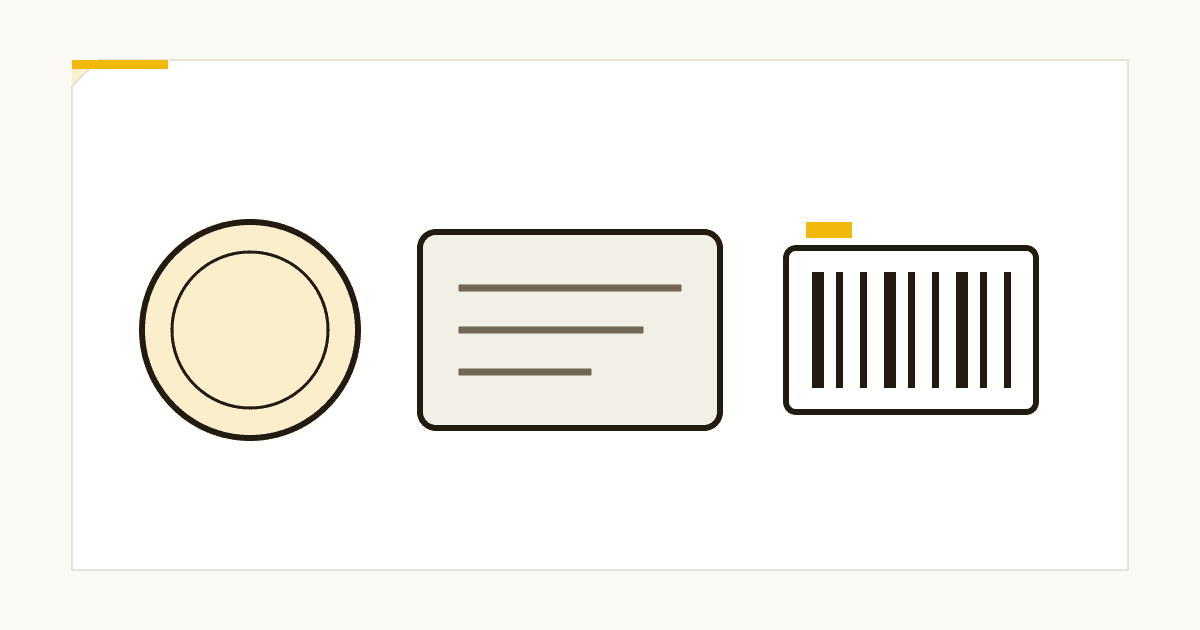
A label format is not a matter of taste. It follows the surface you stick it to and the information the label must carry. A bottle, a pouch, a box and a shipping carton do not take the same shape — the constraint decides.
The round one, for a product seen at a glance
A 4 cm round carries a logo and a name, and nothing more. It is the format for jars, pouches and objects where the label is part of the look: it turns, it sits straight on a lid, and it takes no room.
The round format works when the label is the logo. If it must also carry an ingredient list, a volume or a date, the round becomes too small and you move to the rectangle.
The rectangle, for a product that explains itself
A 5 × 3 cm rectangle holds two lines: the product name, the volume, or a usage note. It is the format for bottles, jars and flexible pouches, where the label has to stay readable while bent around a curve.
On a surface that meets water — a kitchen bottle, a chilled item, a parcel in transit — the material matters as much as the format: a matte white vinyl holds on a wet wall where paper wears out on the first pass.
The barcode strip, for stock you count
The 50 × 30 mm rolls carry no logo. They carry a reference, a price or a barcode, printed by a thermal printer. It is the shelf-and-carton format, not the shop-window one.
The rule before you order
Measure the available surface in centimetres — width and height — then write down what the label must carry. One word: the round is enough. Two lines: take the rectangle. A code: take the strip. That sentence decides the format, not the price.
Read next
Labels & stickers
Kraft, matte or gloss: choosing a finish
A finish is not a quality — it is behaviour: what light does to the surface, and what the surface does to the product it sits on.
Milsaqa2 min